Focus Areas



We apply our world-class expertise in cardiovascular signaling pathways to discover new ways to treat heart failure and cardiac arrhythmias.
Cardurion is advancing innovative medicines that offer new therapeutic approaches to cardiovascular disease, the leading cause of death worldwide. CVD causes nearly 1 million deaths in the US each year - one every 34 seconds, more than all cancers and chronic lung disease combined.
At Cardurion, we are advancing the understanding of signaling pathways that regulate heart cell function. Our goal is to reverse the pathophysiological mechanisms that drive cardiovascular disease by modulating these pathways. Based on the innovative drug candidates in our pipeline, our near-term focus is on heart failure and cardiac arrhythmias.
Heart Failure
Heart failure remains a major unmet need and is a leading cause of mortality.
Heart failure affects an estimated 6.7 million Americans, a number projected to exceed 8.5 million by the end of the decade, and more than 64 million adults globally.
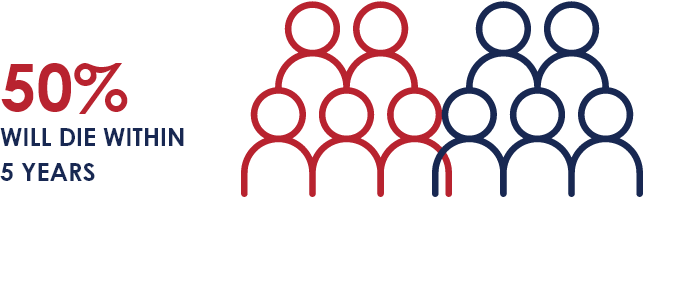
Heart failure is a serious condition in which the heart muscle doesn’t pump blood as efficiently as it should, causing shortness of breath, fatigue, and swelling of the feet, ankles, legs, abdomen, or neck veins, and has a 50% mortality rate within five years of diagnosis.
There are two major types of heart failure that differ in their underlying biology and existing treatment options. Patients across both types of heart failure have unmet medical needs, and there is an opportunity to develop novel therapies for heart failure to improve outcomes and have a better tolerability profile.
Heart Failure
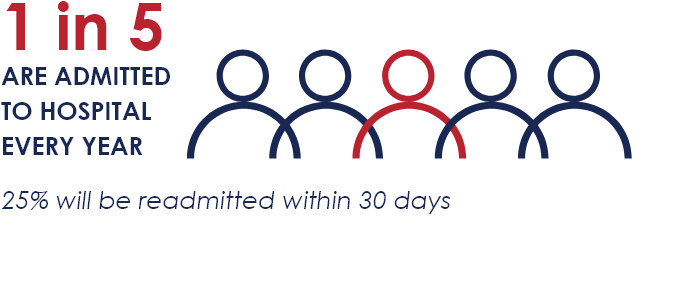
Both major types of heart failure have high rates of hospitalization.
Patients with heart failure with reduced ejection fraction (HFrEF) have a weakened heart pump and are treated with a well-established four-drug combination that meaningfully reduces hospitalizations and death. The priority here is building on that already-effective foundation with new, highly tolerable mechanisms that can be layered on top to further reduce residual risk.
Patients with heart failure with preserved ejection fraction (HFpEF) have hearts that don’t relax and fill properly. Because mechanisms effective in HFrEF have largely failed in this population, treatment options remain very limited, and there’s a pressing need for genuinely new mechanisms that address the underlying biology of HFpEF.
Cardiac Arrhythmias
There is a global surge in serious heart rhythm disorders.

Arrhythmias, or abnormal heart rhythms, arise from disruptions to the heart’s electrical activity. They range widely in origin, from arrhythmias acquired over a lifetime through aging and disease, to those inherited through a genetic mutation present from birth.
The most common sustained cardiac arrhythmia is atrial fibrillation (AFib) which is primarily driven by aging and comorbidities such as hypertension, diabetes, obesity and heart failure.
Inherited arrythmias are rare, but can result in sudden and severe cardiac events.
Cardiac Arrhythmias
>25% of new diagnoses of AFib now occur in adults under age 65.
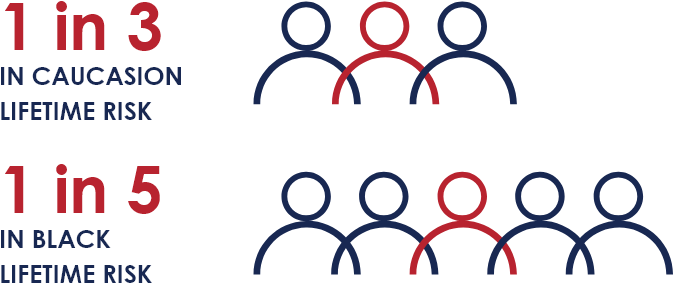
AFib is characterized by chaotic, uncoordinated electrical activity in the atria that impairs the heart’s pumping efficiency. It increases risks of stroke, systemic embolism, heart failure, dementia, and cardiovascular mortality. It also recurs and progresses over time. Current medication treatment options are severely limited by side effects and are contraindicated for many patients with AFib. Catheter ablation is a standard-of-care procedure available to some patients but has a failure rate of about 33% in the first year.
Cardiac Arrhythmias
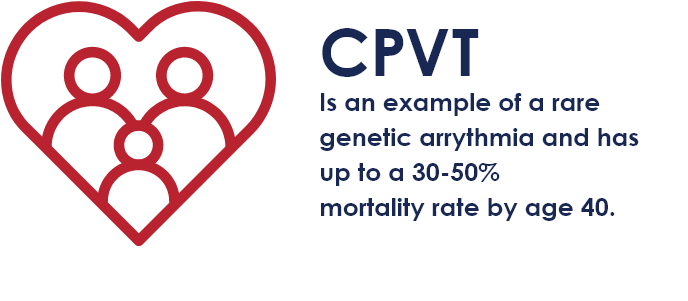
Genetic arrhythmias are a group of rare, inherited conditions, that include catecholaminergic polymorphic ventricular tachycardia (CPVT). These conditions are caused by mutations that affect the heart’s electrical or calcium-handling machinery, and vary widely in prevalence, presentation, and age of onset. CPVT, in particular, is estimated to affect roughly 1 in 10,000 individuals and generally presents in children and young adults, most often triggered by exercise or acute emotional stress. There are no therapies currently approved for CPVT.
With its role in calcium handling, Cardurion’s CaMKII inhibitor has the potential to treat multiple types of cardiac arrhythmias. Cardurion is currently conducting a clinical trial with its CaMKII inhibitor in the treatment of CPVT.